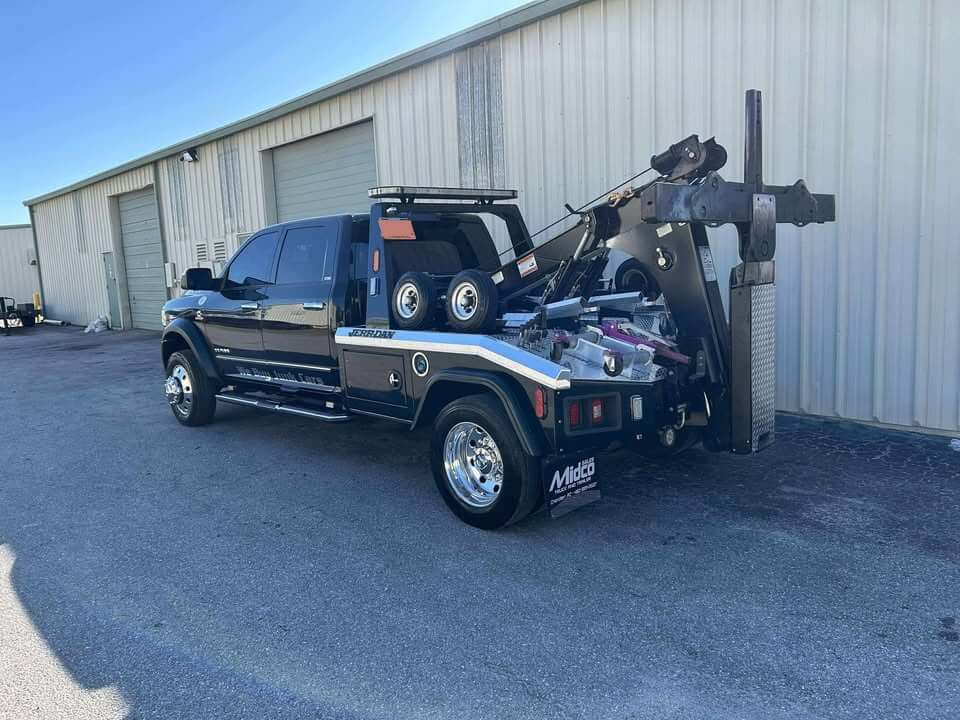
A new truck doesn't earn on day one.
You take delivery on a Tuesday. The driver doesn't start rolling until the following Monday. First week is slow — the truck's new to the routes, the dispatchers are learning it's available, the contracts haven't fully rotated it into the lineup yet. Real revenue doesn't show up until week three or four.
And the first full monthly payment? That's due about the time the truck is finally hitting its stride.
Deferred payment financing fixes the timing problem. You take delivery today. You pay $99/month for 60, 90, or 120 days — enough to keep the account active and build your payment history — and the real monthly payment doesn't start until the truck has had time to find its rhythm.
This isn't a promotional rate. It isn't a credit-tier giveaway. It's open to any operator who qualifies for our financing.
THE TIMING PROBLEM
Why the First 90 Days Matter More Than You Think
A tow truck payment doesn't care that the truck is new to the fleet. The first invoice lands on the same schedule whether the truck did 40 tows that month or 4.
Here's what actually happens in the first 90 days of a new truck:
- Weeks 1–2 — Upfit, registration, permits, insurance, driver onboarding.
- Weeks 3–4 — Soft launch, building into dispatch rotation, learning new routes.
- Weeks 5–8 — Hitting normal volume, but still catching up on 30–45 day receivables.
- Weeks 9–12 — Cash from early tows finally lands. Truck is now self-funding.
That's the real curve. Every operator who's added a truck has lived it.
The payment calendar and the revenue calendar don't match. Deferred payments align them.
The first real payment lands in month four or later — right around the time cash from the truck's earliest work is hitting the bank.

TIME IT RIGHT.
See your deferred payment in 30 seconds.
Who Uses Deferred Payments (And Why)
This isn't a first-truck program. It's a timing program. It's built for operators who are already qualified — who already know how towing works — and want the payment schedule to line up with actual cash flow.
- Operators adding capacity — You're running 3 trucks and adding a 4th. Give the new truck time to earn its spot in the rotation before the real payment starts.
- Seasonal ramps — Winter recovery, summer highway work, storm response. Pay $99 through the slow months. Real payments start when the work starts.
- New market expansion — New service area or new motor club relationship. Contracts take time to rotate the new truck into calls. Deferred payments carry you through the ramp.
- Replacing a truck still on payments — Old truck has 4 months left on its note. Don't pay two full payments at once — defer the new one until the old one falls off.
Anyone who qualifies for our financing qualifies for deferred payments. There's no separate bar. If you're approved, it's on the table.
Three Options. Same Qualification. Straight Math.
When you're approved, you choose the deferral window that matches your situation:
- 60 days — Tightest window. Smallest adjustment to the remaining payments.
- 90 days — The middle option. Most operators land here.
- 120 days — Longest runway. Slightly higher adjustment on the remaining payments.
During the deferral window, you pay $99/month in touch payments. Not a skipped month. A real payment that keeps the account active, logs on-time history with the lender, and shows the paper trail of a performing borrower.
When the deferral ends, your real monthly payment starts.
What the Deferral Actually Costs You
Here's the part most lenders skip over. We'll put it on the table.
Deferring doesn't erase payments. It compresses them.
Take a 74-month term. Use the longest deferral. You pay $99 for the first 6 months, then make 68 real payments covering the same amount financed.
Example: $95,000 financed truck, 74-month term, longest deferral window.
Touch payments at $99
- Standard
- 0 months
- Deferred
- 6 months
Real monthly payment
- Standard
- ~$1,520/mo (mo 1–74)
- Deferred
- ~$1,660/mo (mo 7–74)
Total real payments
- Standard
- 74
- Deferred
- 68
Cash freed in first 6 months
- Standard
- $0
- Deferred
- ~$8,500
The difference is roughly $140/month on the remaining term. In exchange, you get ~$8,500 of cash flow back in the first six months — when the truck is ramping and that cash is doing the most work.
Six months of breathing room for about $140/month more on the back half. That's the trade.
Most operators run the math and take it.
One honest note on rate: your rate may come in slightly higher on a deferred structure than a standard one — the lender is carrying a little more risk by waiting months for real payments to start. The difference is marginal, and it's reflected in the numbers you see on your approval. No guessing.

SEE THE NUMBERS ON YOUR DEAL.
Deferred and standard payments, side by side in 30 seconds.
Touch Payments Aren't Skipped Payments
A skipped payment shows up on your credit report as a skipped payment. It dings your history with the lender. It makes the next loan harder.
A touch payment is a real, on-time payment. $99 hits the account every month during the deferral window. The lender sees on-time payments. Your account is in good standing from day one.
That matters when you come back for truck #2, truck #5, the wrecker, the rotator. The file the underwriter pulls shows a clean payment record — not a gap.
Same Bar. No Extra Hoops.
There is no separate credit tier for deferred payments. If you qualify to finance the truck, you qualify for the deferral.
- Credit baseline — 640, same as all our tow truck financing.
- Business requirement — Same as standard — active towing operation or comparable experience.
- Paperwork — Same as standard. Nothing extra for the deferred option.
- Truck eligibility — Any truck we finance. New, used, dealer, private seller, auction.
You tell us 60, 90, or 120 at application. The structure is in the offer from the first approval.
Run the Numbers Before You Commit
Gut feel says the deferral will fit. But you should know exactly how the cash flow reshapes before you sign.
Our tow truck ROI calculator lets you plug in purchase price, tow volume, rate per call, insurance, and fuel — and see what comes back:
Monthly cash flow — during the touch-payment window vs. after real payments start
Breakeven calls — how many tows per month the truck needs to cover the real payment
Ramp-up runway — how much working capital stays in the business during the deferral
No signup. No email required. Just your numbers and the answer.
Pair It With What Works for You
Deferred payments is one piece. We built programs around how towing operators actually buy and run trucks.

Zero down
$0 down on nearly every approval. Keep the working capital in your business on day one, then pair with deferred payments for maximum cash preservation through the ramp.
See details
Fleet financing
Adding your third, fifth, or tenth truck? Fleet operators get streamlined approvals and terms that reflect the business you've already built.
See details
Private-party financing
Found the right truck from another operator? We finance private-party deals with the same terms as dealer purchases. No markup, no middleman.
See details